banks
banks


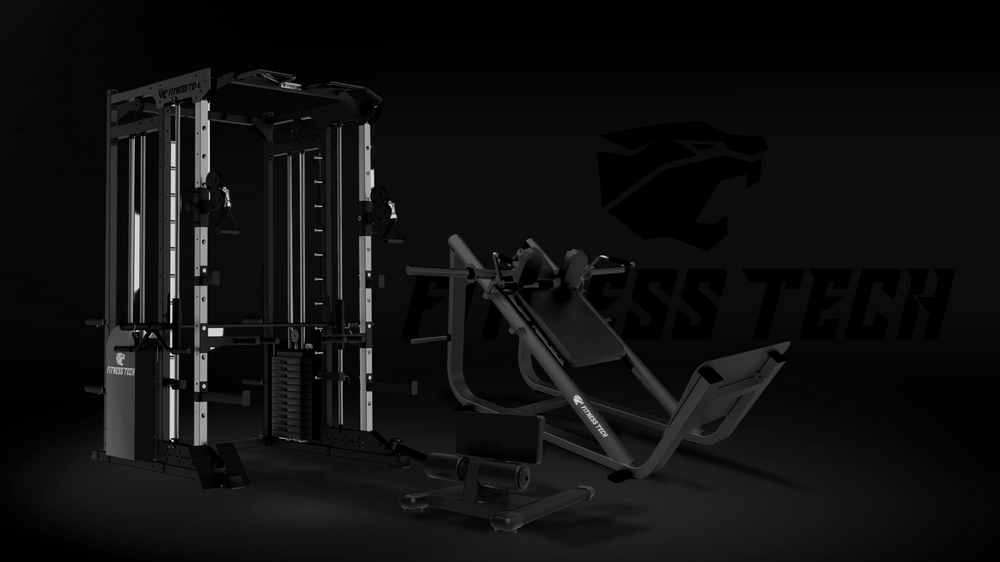
Weight benches are among the most versatile pieces of equipment for strength training, both at home and in a gym. They allow you to perform exercises with dumbbells, barbells and other accessories, as well as providing support for training the chest, shoulders, arms, back, glutes, legs and core.
At Fitness Tech you will find flat, adjustable FID, folding, Olympic and multifunction weight benches, as well as specialized benches for exercises such as hip thrusts, preacher curls and posterior-chain training. The choice will mainly depend on the type of training, the available space, the load you intend to use and the expected intensity of use.
If you are looking for a bench for a home gym, a training room or a professional facility, it is important to compare not only the price but also aspects such as stability, adjustment positions, dimensions, maximum load and compatibility with racks or power cages.
Not all benches are designed for the same type of training. A flat bench prioritizes simplicity and stability, while an adjustable FID bench allows you to modify the training angle. There are also folding benches for small spaces, Olympic benches with barbell supports and multifunction benches with additional accessories.
Choosing the right type of bench makes it possible to make better use of the available space and adapt the equipment to the exercises you are actually going to perform.
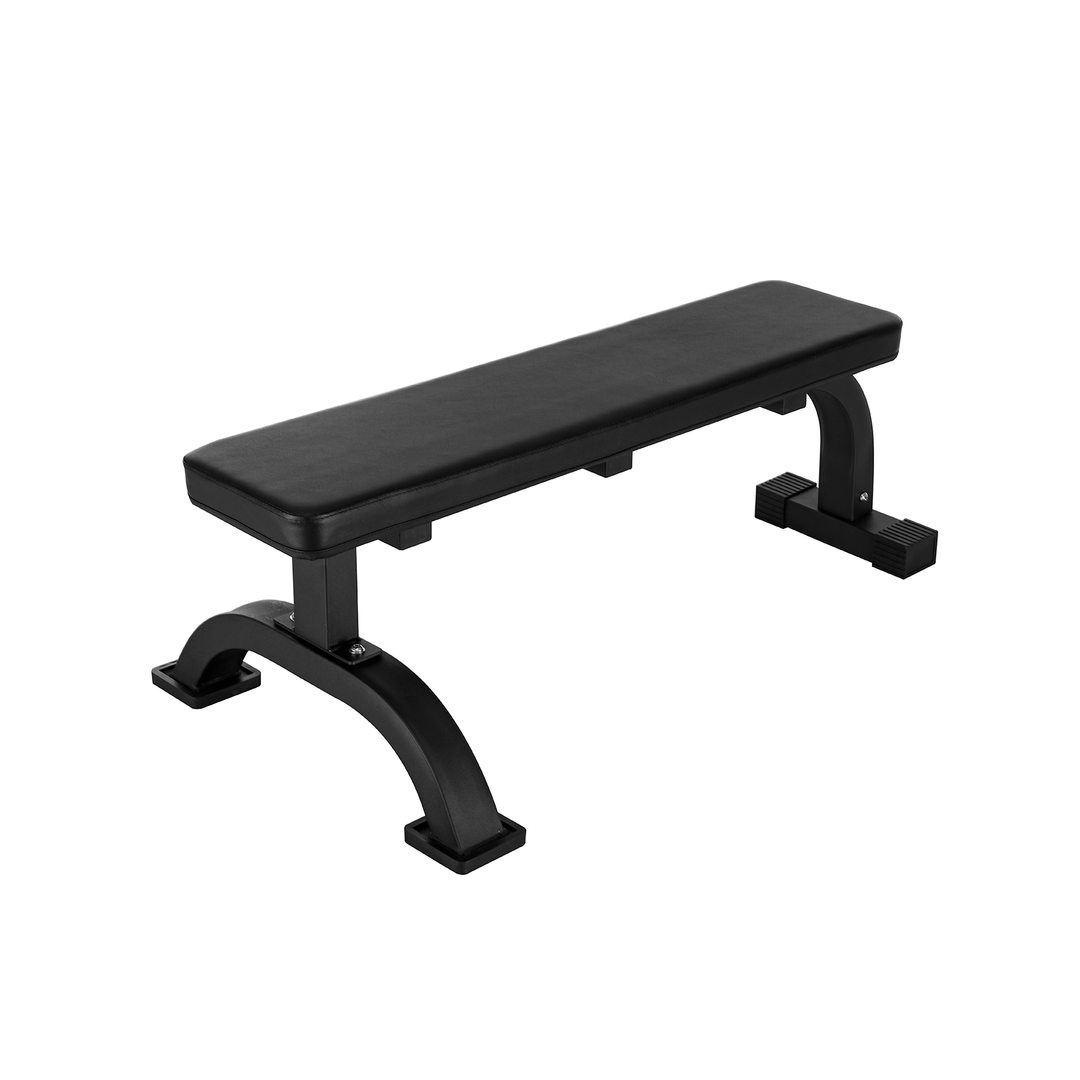
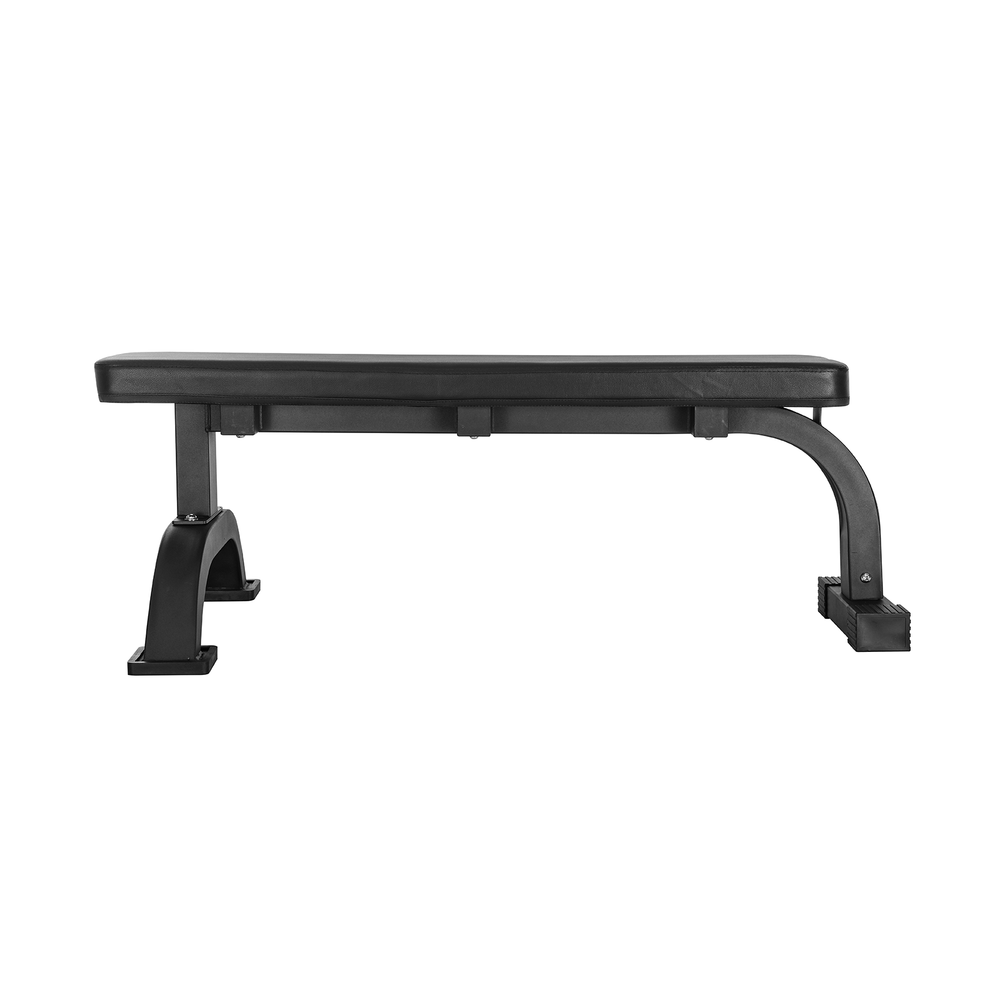
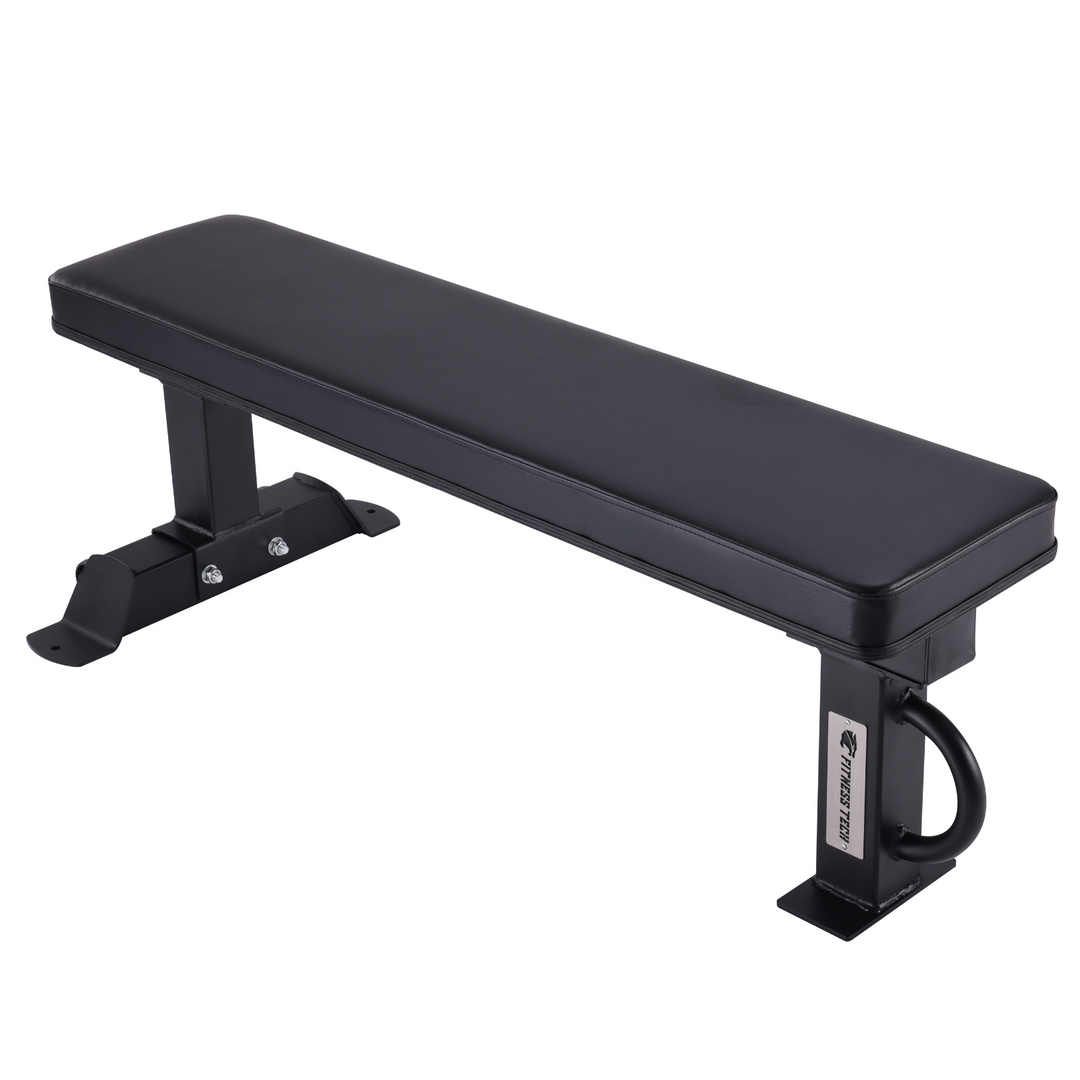
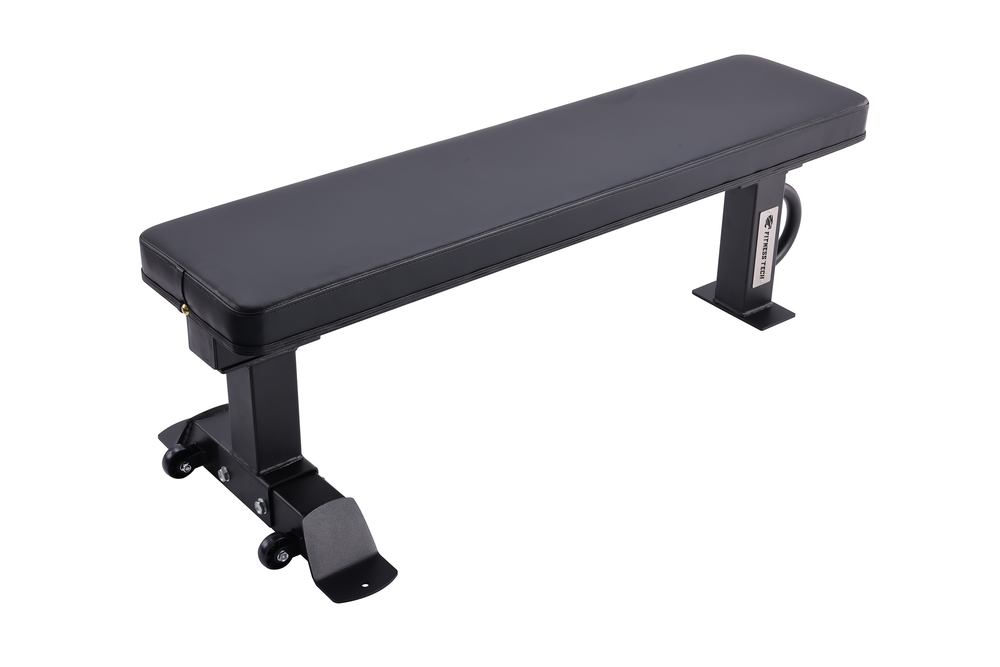
The flat weight bench maintains a fixed horizontal position and stands out for its simplicity and stability. It is a particularly practical option for performing bench presses with dumbbells or a barbell, flyes, pullovers, one-arm dumbbell rows and numerous strength exercises.
As it does not include mechanisms for adjusting the backrest, it generally offers a simple, sturdy structure. It can also be used with a rack or power cage, provided that the dimensions of both pieces of equipment are compatible.
For those primarily looking for flat bench press, free-weight training and basic exercises, it can be one of the most straightforward options.
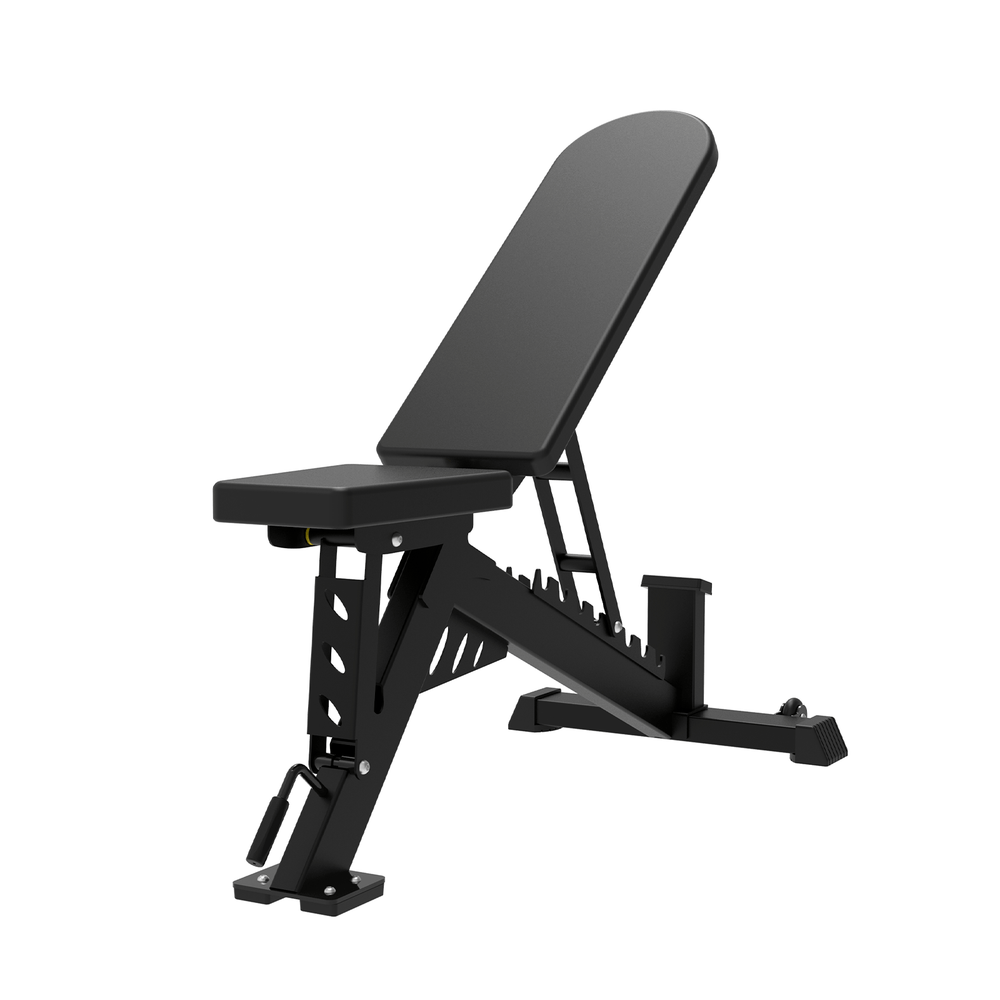
A FID bench is an adjustable bench that supports Flat, Incline and Decline positions, that is, flat, inclined and declined, depending on the options available on each model.
Adjusting the backrest makes it possible to change the angle from which the exercise is performed. This multiplies the training possibilities with a single bench: flat bench press, incline bench press, certain shoulder exercises, seated biceps curls, dumbbell flyes, and many other movements.
When comparing adjustable benches, it is worth checking how many positions the backrest offers, whether the seat is also adjustable, and how the adjustment system works. It is not simply a matter of having many positions, but of achieving stable support at the angles that will actually be used.
Due to its versatility, an adjustable FID bench can be especially interesting when you want to set up a complete strength-training area using as few pieces of equipment as possible.
A folding weight bench is designed for those who need to make the most of the available space. Its structure allows the equipment’s dimensions to be reduced when it is not in use, making storage easier.
It can be an especially useful alternative for a home gym, a training room, or any space that serves other purposes during the day.
Before buying, it is advisable to check both the unfolded dimensions and folded dimensions. Two benches may occupy a similar amount of space during exercise and yet be very different once stored.
The maximum load, the stability of the folding system, and the available positions should also be checked. If you are going to move it frequently, the bench’s total weight and ease of transport also become important.
The Olympic bench combines the training surface with supports for positioning the barbell. It is particularly suited to the barbell bench press and makes it possible to set up a dedicated station for this exercise without necessarily relying on a separate rack.
Depending on the model, the supports may offer different height settings and safety solutions. When choosing one, it is important to consider the width of the supports, the maximum permitted load, the station’s dimensions, and the space required around the bench to handle the bar and weight plates comfortably.
It is an especially interesting option when the barbell bench press plays an important role in the training routine.
A multifunction weight bench expands the possibilities of a traditional bench by incorporating different accessories or training stations.
Depending on the model, it may include components for quadriceps extensions, leg curls, preacher biceps curls, or additional free-weight exercises.
Its main advantage is concentrating different training options in a single structure. Therefore, it can be particularly useful for a home gym when you want to perform a more complete routine without installing several independent machines.
Before choosing one, it is important to check which accessories the model actually includes, which are optional, and the maximum load supported by each station.
In addition to traditional benches, there is equipment developed specifically for certain movements.
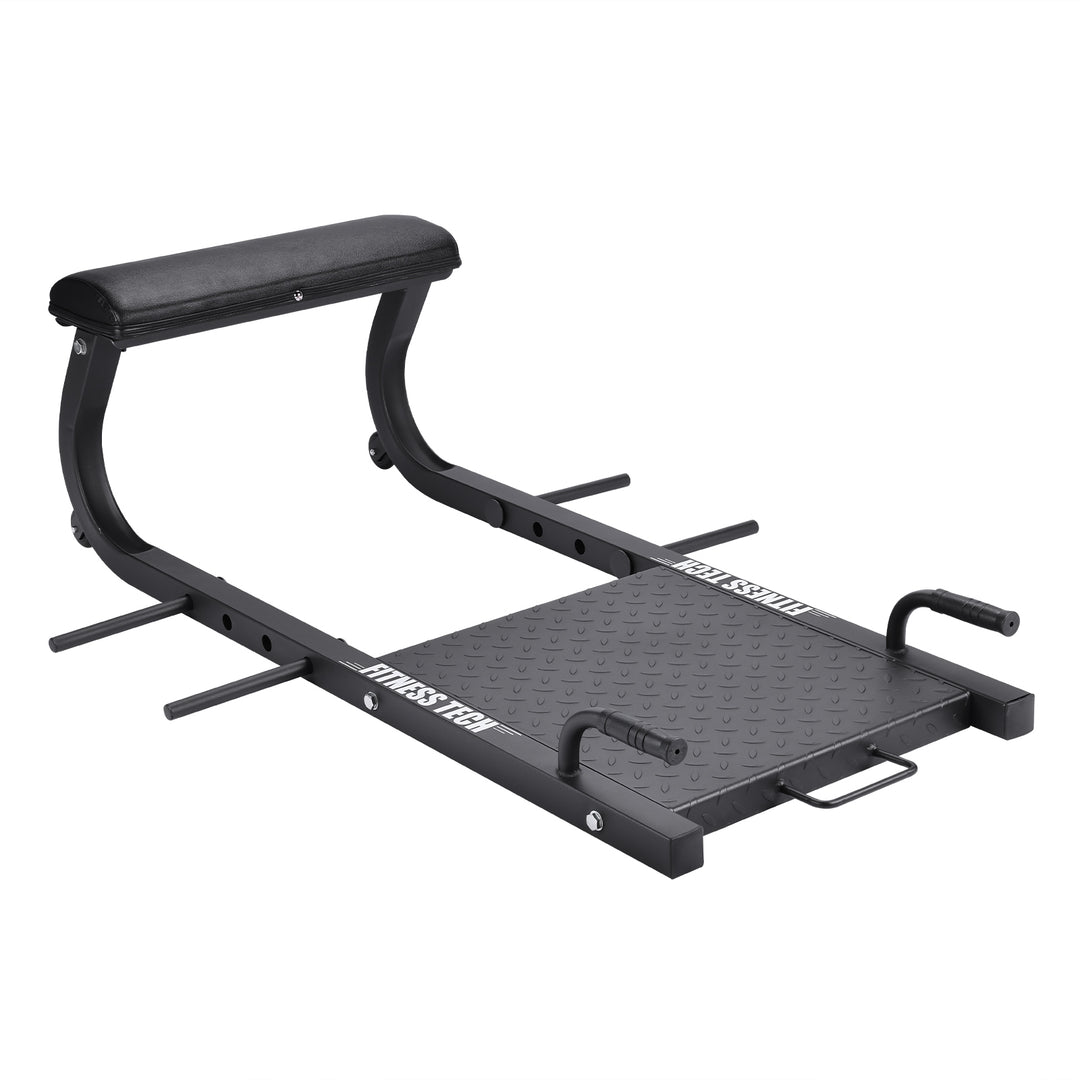
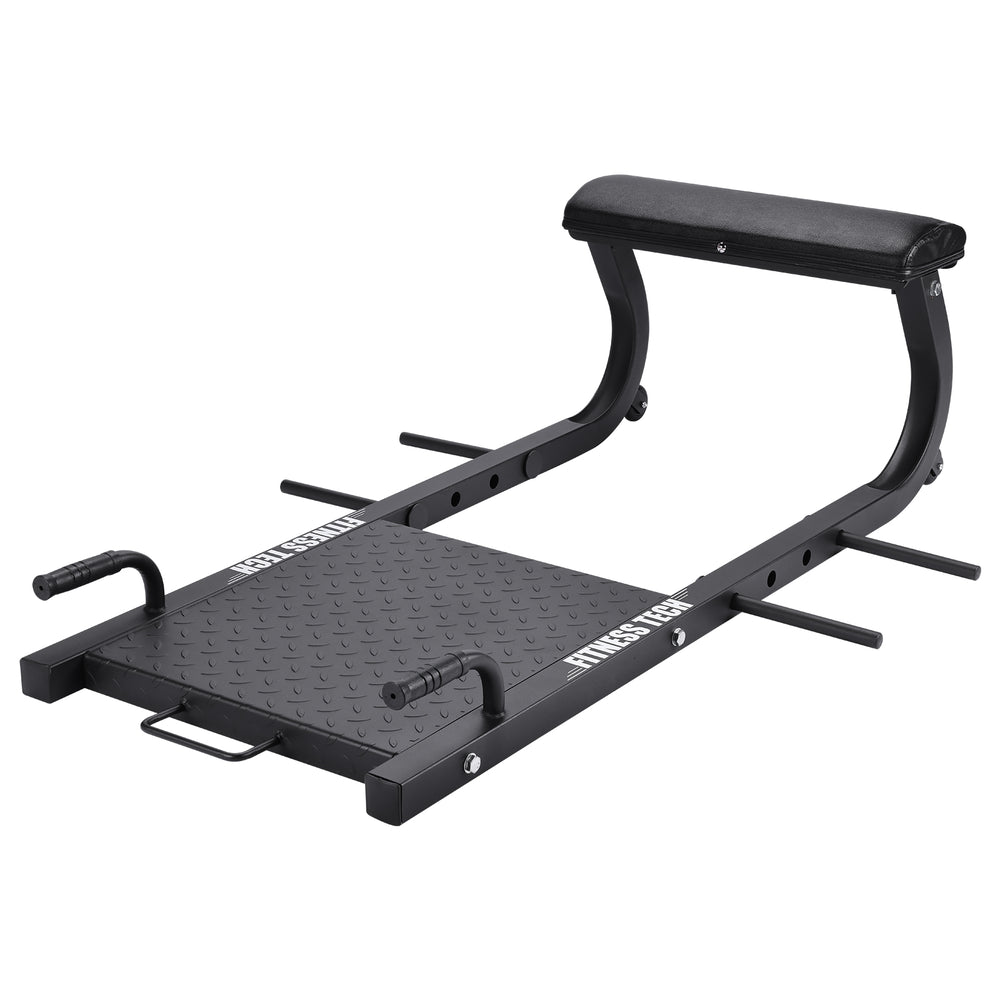
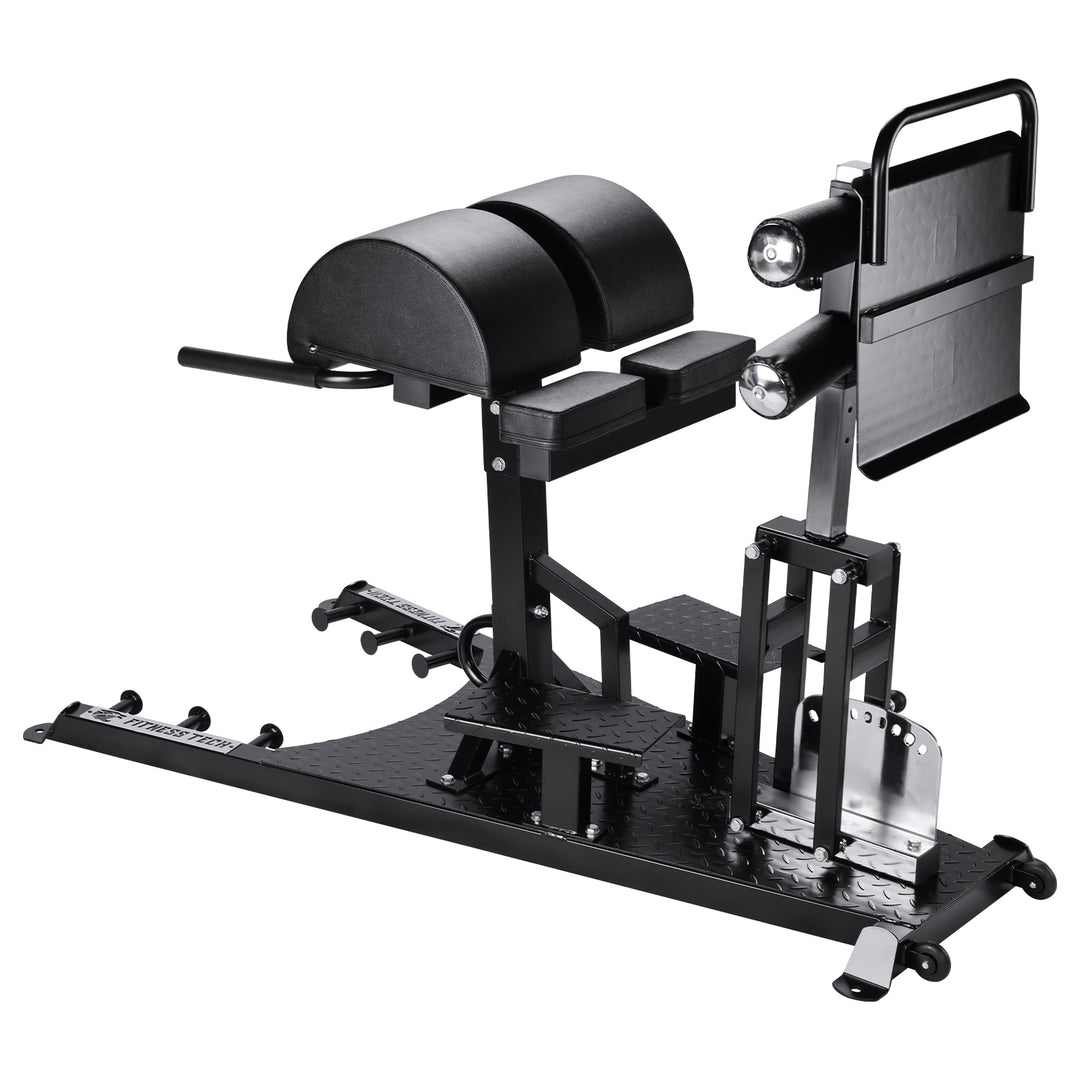
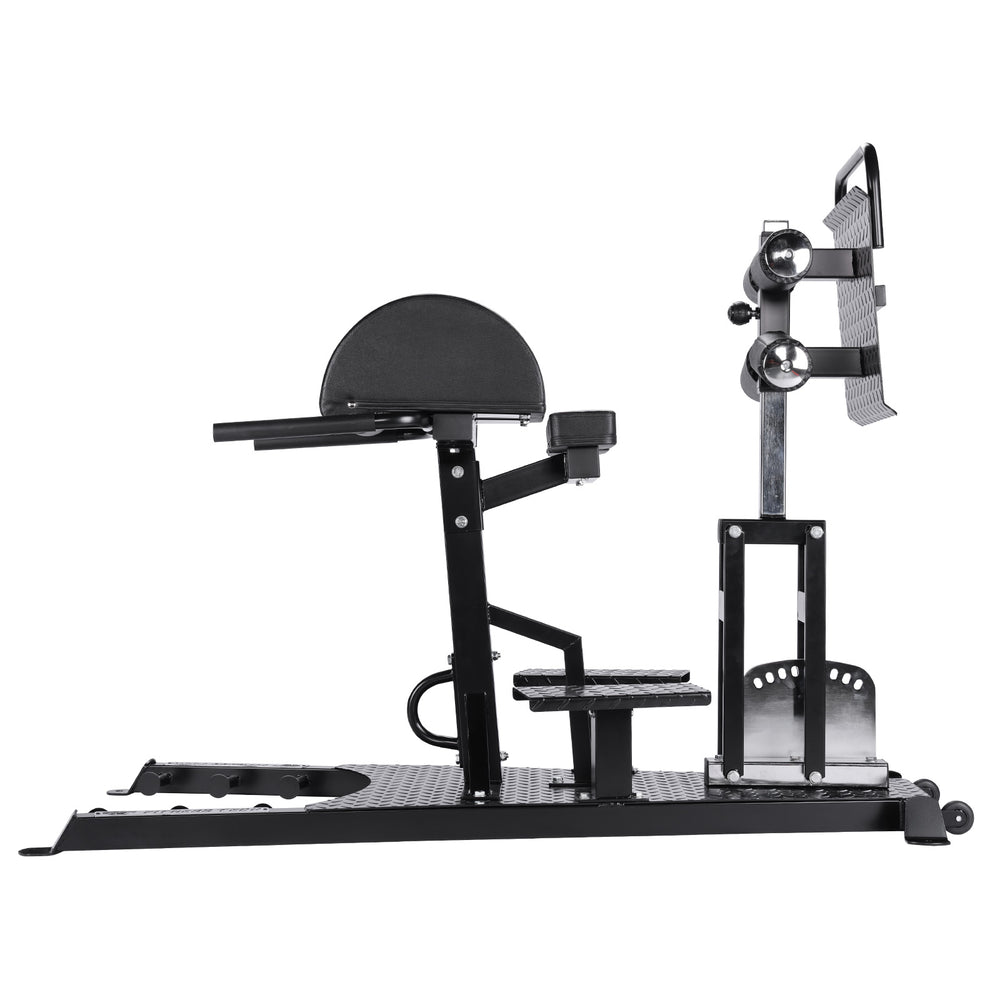
Hip Thrust benches provide a stable position for performing hip thrusts and primarily working the glutes. GHD equipment is designed to train the posterior chain and allows various exercises for the glutes, hamstrings, lower back, and core.
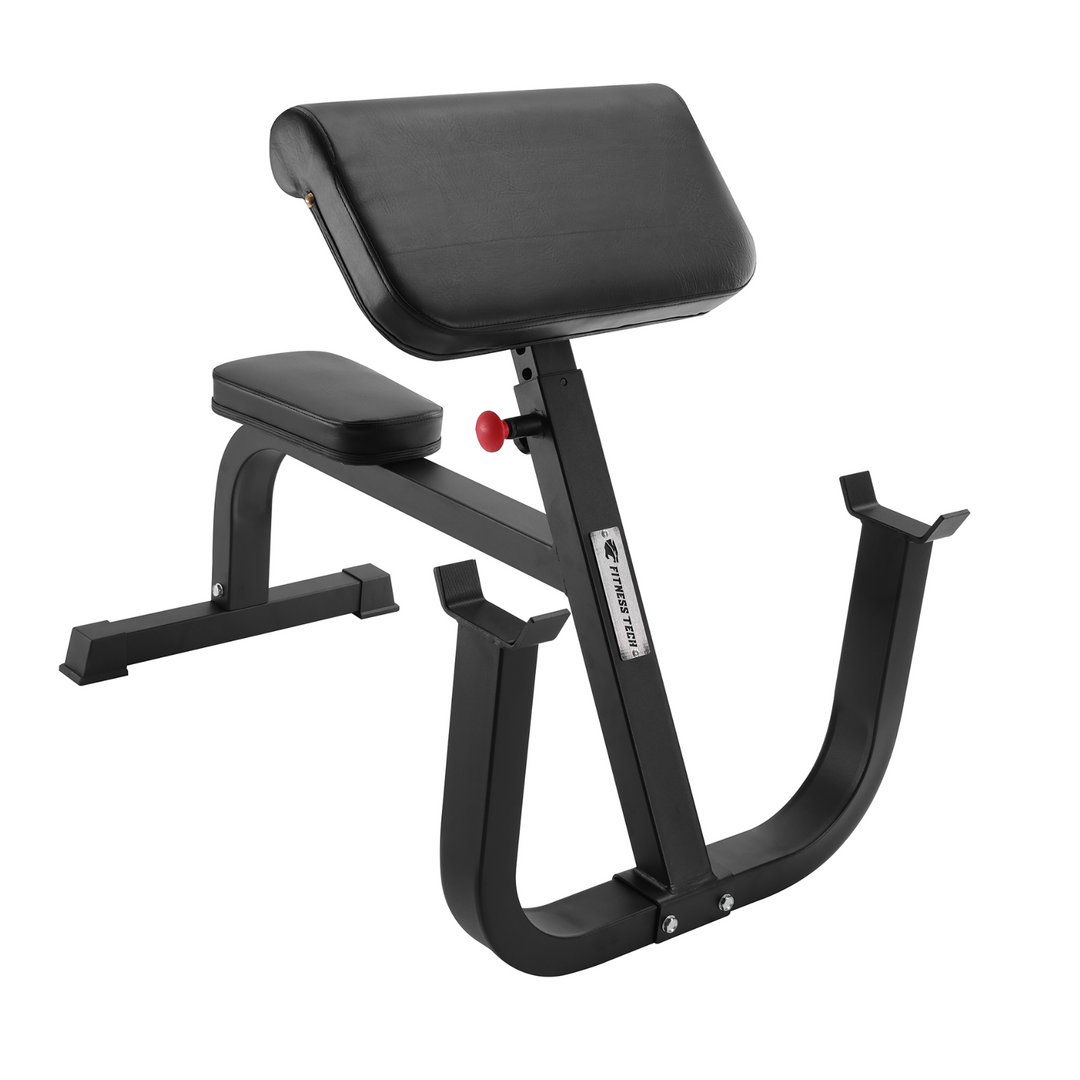
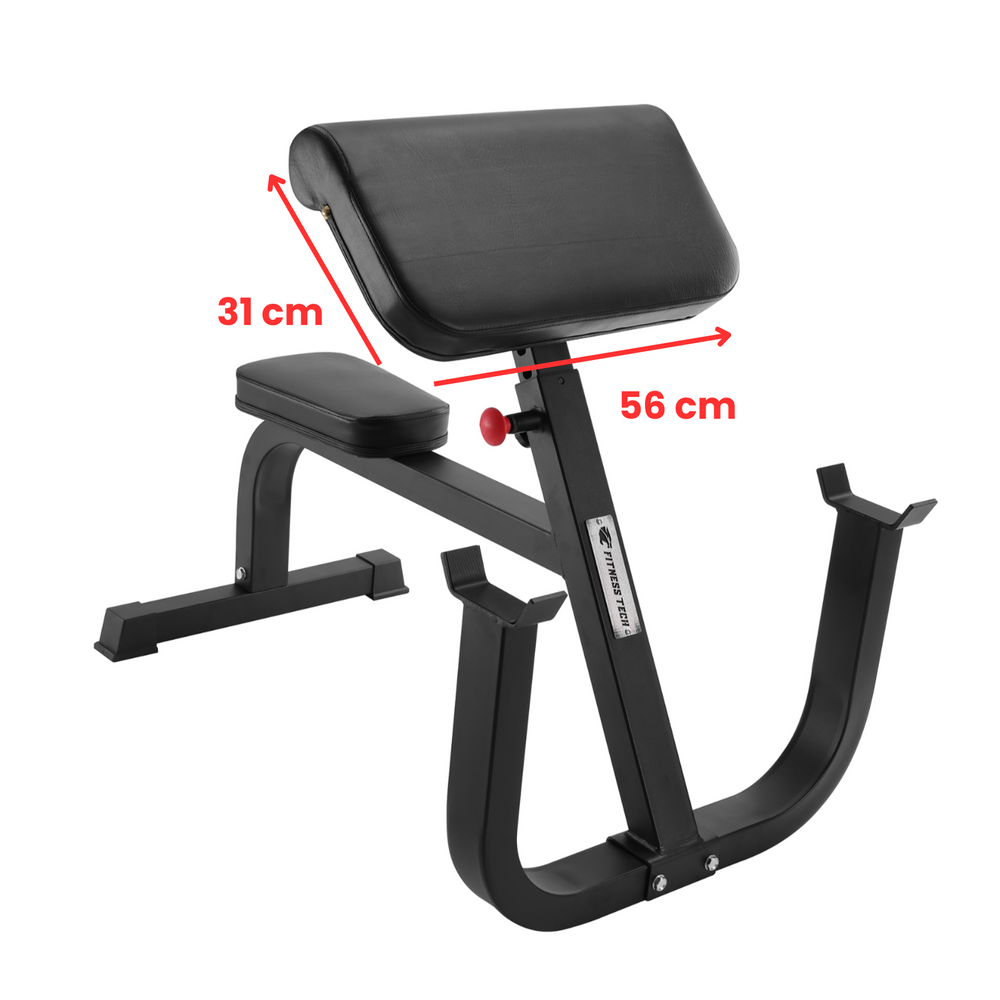
The Scott bench or preacher bench is specifically designed for biceps curls with arm support, helping to reduce body swinging and enabling more controlled movement.
Choosing a specific bench makes sense when that exercise or muscle group plays an important role in your training program.
To buy a suitable weight bench, it is not enough to decide whether it will be flat or adjustable. You must consider the maximum load, dimensions, adjustment options, type of training, and intensity of use together.
A bench for occasional home workouts does not necessarily have the same requirements as one intended for a facility used daily by numerous users.
The maximum supported load is one of the most important aspects of a weight bench.
You should check what the manufacturer includes within that limit, as it may refer to the combined weight of the user and the load used during the exercise.
As a general guide, there are home benches designed for more moderate loads, semi-professional models with a higher capacity, and professional benches capable of handling considerably greater loads.
The choice should always be made by referring to the model’s technical specifications. In addition, it is advisable to allow some margin above the maximum load you expect to use and not habitually work at the structural limit specified by the manufacturer.
If you train the bench press with heavy loads, this criterion should carry more weight in your decision than if you mainly use light dumbbells or perform accessory exercises.
Before choosing a bench, measure the available space, keeping in mind that you need room not only to place the equipment, but also to train and handle barbells or dumbbells comfortably.
For a fixed bench, you should mainly check the length, width and height. With a folding bench, it is also useful to know its folded dimensions to determine where it can be stored.
If the bench will be used alongside a cage, rack or weightlifting structure, you should also check that there is enough space to bring it in and position it correctly.
For a small home gym, it may make sense to prioritize a folding or compact bench. In a professional facility, where the bench will normally remain in the free-weight area, stability and resistance to continuous use may be more important.
The user’s experience level is not the only factor that determines which bench you need. It also matters how many people will use it and how often.
For home use, a bench may be used during individual workouts several times a week. In semi-professional or professional facilities, the equipment may be used by numerous people and withstand a much higher training volume.
In these cases, the structure’s strength, stability, materials, adjustment quality and upholstery durability become particularly important.
That is why you should choose a bench based on its intended use, rather than solely on the number of exercises it allows you to perform.
Combining a bench with a rack, weightlifting cage or power cage allows you to create a complete barbell training station.
Flat benches and many FID adjustable benches can be used inside this type of structure, but compatibility must be checked for each combination.
Pay particular attention to the bench’s width and length, the surface height, the cage’s internal space, and the position the backrest will occupy when inclined.
You should also check that the bench can be positioned correctly in relation to the bar supports and safety elements.
If you plan to use a Fitness Tech bench with one of our cages or racks, check the dimensions listed in the product specifications before combining them.
A bench allows you to perform many more exercises than the traditional bench press. Depending on whether it is a flat, adjustable, multifunction, or specialised model, it can be used to work virtually the entire body.
For the chest, one of the main exercises is the bench press, which can be performed in a flat position and, with a compatible FID bench, also at an incline or decline.
You can also perform:
Changing the backrest position allows you to modify the exercise angle and expand your training options without needing to change stations.
The bench can also be used for support during numerous lower-body and core exercises.
Options include the hip thrust, step-ups, Bulgarian split squats, and various abdominal exercises.
Multifunction benches with specific modules may also allow leg extensions or leg curls, while a GHD machine is designed for exercises targeting the glutes, hamstrings, lower back, and core.
Before performing any exercise, check that the bench is designed for that use and that it is correctly positioned and stabilised.
At Fitness Tech, you can find weight benches for home, semi-professional, and professional use, with options for setting up a home gym as well as equipping weight rooms and sports facilities.
The catalogue includes different configurations: flat benches, adjustable FID benches, folding benches, Olympic benches, multifunction benches, Hip Thrust benches, GHD benches, and Scott or preacher benches, among other solutions.
We also offer models aimed at the professional segment across our various equipment ranges and series.
If you are looking for a budget weight bench, it is not advisable to consider price alone. Factors such as maximum load, stability, adjustment system, dimensions, and intended use make it easier to compare the value for money of different models.
Always check each product’s specifications to verify its exact features, as adjustment positions, dimensions, maximum load, and accessories vary from one bench to another.